New scientific evidence suggests eagles may have hunted early human ancestors
Researchers have found evidence that large birds of prey are capable of hunting much larger heavy prey than previously thought, reviving discussions about evolutionary dangers to early hominids.
 🧠AI Analysis
Photo: UNIAN
Key points
- Scientists found evidence that eagles can hunt animals weighing over 20 kg.
- Remains of baboons with eagle predation marks were discovered in Chad.
- The study revives debate regarding potential threats to early hominids.
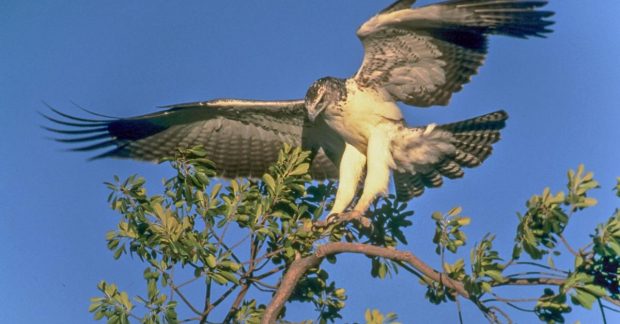
For a long time, the scientific community widely believed that the body mass of modern and fossil humans was simply too large for successful attacks by birds of prey. However, recent findings by anthropologists and biologists have forced experts to reconsider established limits on the capabilities of avian predators. In the Sahara Desert within Chad, scientists discovered the remains of adult baboons that had been successfully hunted by local Verreaux's eagles.
Evidence from the Chadian Desert and its significance
An analysis of the bones revealed deep, characteristic claw marks, indicating that the birds actively killed their prey independently and transported it back to their nests. While researchers previously estimated that eagles could not handle primates weighing over 13 kilograms, this study documented attacks on primates with an average weight exceeding 22 kilograms, with the largest specimen reaching 26 kilograms.
These findings suggest that millions of years ago, similar apex raptors could have posed a threat to early human ancestors. Specifically, scientists point to Australopithecus afarensis, who lived approximately 3.2 million years ago in modern-day Ethiopia and weighed about 28 kilograms. Lead researcher Professor Catherine Hobaiter notes that currently, only a single firmly documented case of such a predatory attack exists.
"The only confirmed case is the Taung child, an Australopithecus, which we believe was taken by a large eagle around 2.8 million years ago," she told Live Science.
Naturally, these evolutionary risks do not have any direct practical impact on the daily lives of modern city residents. For the citizens of Bucha and the broader community, this type of news primarily serves an educational and informative role, highlighting how ongoing research in evolutionary biology and paleontology continuously refines our understanding of Earth's deep past.
Source UNIAN — unian.ua/science/orli-mogli-polyuvati-na-lyudey-v-minulomu-vcheni-z… ↗
Read next
 🇺🇦Ukraine
Lithuania denies Russian accusations of using its airspace for drone attacks
The Lithuanian Ministry of Foreign Affairs has officially refuted allegations by Russian authorities regarding the alleged use of Lithuanian airspace for drone strikes on…
 👥Society
Kitchen Trends: Optimizing Living Space in Bucha Apartments
Interior designers suggest moving away from bulky dining sets in favor of compact, cafe-style seating arrangements.
 🛡️Security
Explosions and smoke reported in Krasnodar following drone attack near military facility
A drone attack in the Russian city of Krasnodar resulted in explosions and smoke rising near a National Guard base.
 🇺🇦Ukraine
Donald Trump comments on the departure of press secretary Karoline Leavitt
President Donald Trump addressed the resignation of White House press secretary Karoline Leavitt, who stepped down to focus on her family.
 🎭Culture & Sport
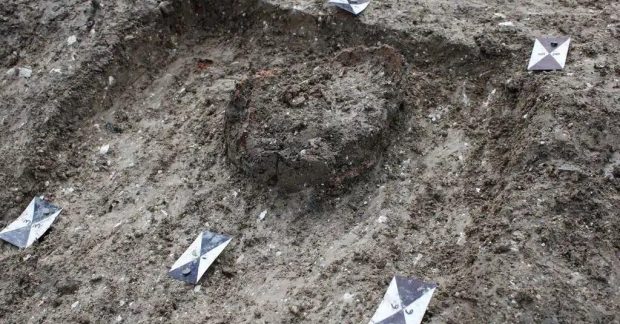
Archaeologists discover unique Roman infant burial in Great Britain
During excavations in Buckinghamshire, researchers found a ceramic vessel containing the remains of an infant and birds, dating back to the 3rd-4th century AD.
 🎭Culture & Sport
Hair Care Secrets: Japanese Methods for a Healthy Scalp
Japanese beauty rituals focus on scalp health, which is the key to achieving strong, shiny, and well-maintained hair.