Artificial Intelligence on the Frontline: How Ukrainian Ground Robots Move Toward Autonomy
Ukrainian developers of ground robotic systems are actively implementing AI elements, autopilot, and autonomous return functions to reduce dependence on operators.
 🛡️Security
Photo: RBC-Ukraine
Key points
- Transition of UGVs from manual control to partial autonomy
- Implementation of autopilot and Backtrack return functions
- Integration of AI for threat detection and FPV drones
- Combining real combat data and synthetic datasets for model training
Ukraine's defense industry is rapidly evolving toward the automation of ground platforms. While most operations were previously performed in manual mode, engineers are now gradually preparing machinery to execute missions without constant human intervention. One of the greatest challenges remains the changing battlefield environment, where equipment encounters electronic warfare, obstacles, and poor visibility.
Key Technological Challenges and Development Directions
The main issue remains the dependence on stable communication, as the operator must constantly monitor the vehicle's movement over complex routes. If the signal drops, the risk of losing the platform increases significantly. Therefore, key development vectors include autopilot systems to overcome obstacles and the Backtrack feature, which allows the vehicle to return along its traversed path if communication is lost.
Developers are paying special attention to integrating artificial intelligence to detect threats, particularly enemy FPV drones. Automation significantly reduces the burden on operators and enables the simultaneous control of multiple platforms. Achieving a threat detection accuracy of over 95% requires continuous model retraining using both real combat footage and synthetic datasets.
The integration of modern technologies and the creation of a unified ecosystem of aerial and ground unmanned systems shape a new approach to operations.
Creating fully autonomous systems requires significant financial investment, time, and qualified engineering talent. Therefore, developers are moving step by step: first automating specific route segments and eventually building a unified ecosystem where ground and aerial unmanned systems interact seamlessly.
Source RBC-Ukraine — rbc.ua/ukr/news/nrk-aktivno-vikoristovuyut-shi-shcho-mozhut-1795429… ↗
Read next
 🩺Health
Scientists identify two age periods when our immune system ages the fastest
Recent research reveals that human immunity does not age at a steady pace, highlighting two critical transition phases around age 40 and after 60.
 🇺🇦Ukraine
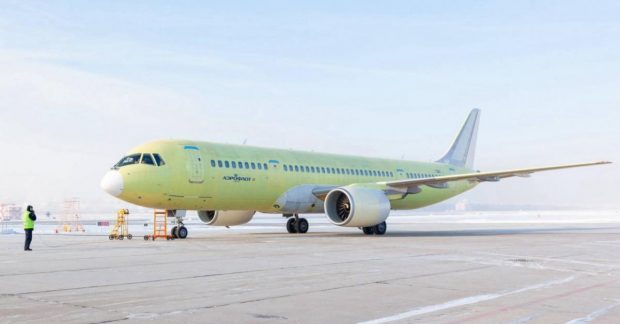
Russia tests second serial MS-21 airliner amid severe aviation sector isolation
The second serial MC-21 passenger aircraft has completed its maiden test flight in Russia. However, aviation experts remain skeptical about mass production capabilities d…
Modern Surgery Unit and Oncology Department Open in Kyiv Regional Children's Hospital
In early November, a high-tech operating unit and oncohematology department opened in the region, with 60 surgeries already performed.
 🧠AI Analysis
Restoration of Lviv's Historical Heritage as an Example for Ukrainian Communities
Lviv has completed the restoration of a destroyed window in the Bernardine Monastery bell tower following a March attack. The project was implemented with the support of …
 🧠AI Analysis
Cabinet of Ministers extends employee reservation until December 20: key changes
The government has issued resolution No. 1452, automatically extending the status of critical enterprises and staff reservations until December 20, 2026.
 🛡️Security
Crimean Bridge Strike: Navy Evaluates Russia's Ability to Clear Blocked Channel
The collapse of the Crimean Bridge arch has blocked the Kerch-Yenikale Canal. Russia may lack the necessary technology and equipment to lift the heavy structure.